 Bahasa Indonesia
 English
 Fakultas Psikologi
Universitas Negeri Yogyakarta
Jalan Colombo No. 1
Karangmalang Sleman, Yogyakarta 55281
Indonesia
Alamat surel: humas_fp@uny.ac.id, sekretaris.dekanfp@uny.ac.id
Instagram: @psikologiuny
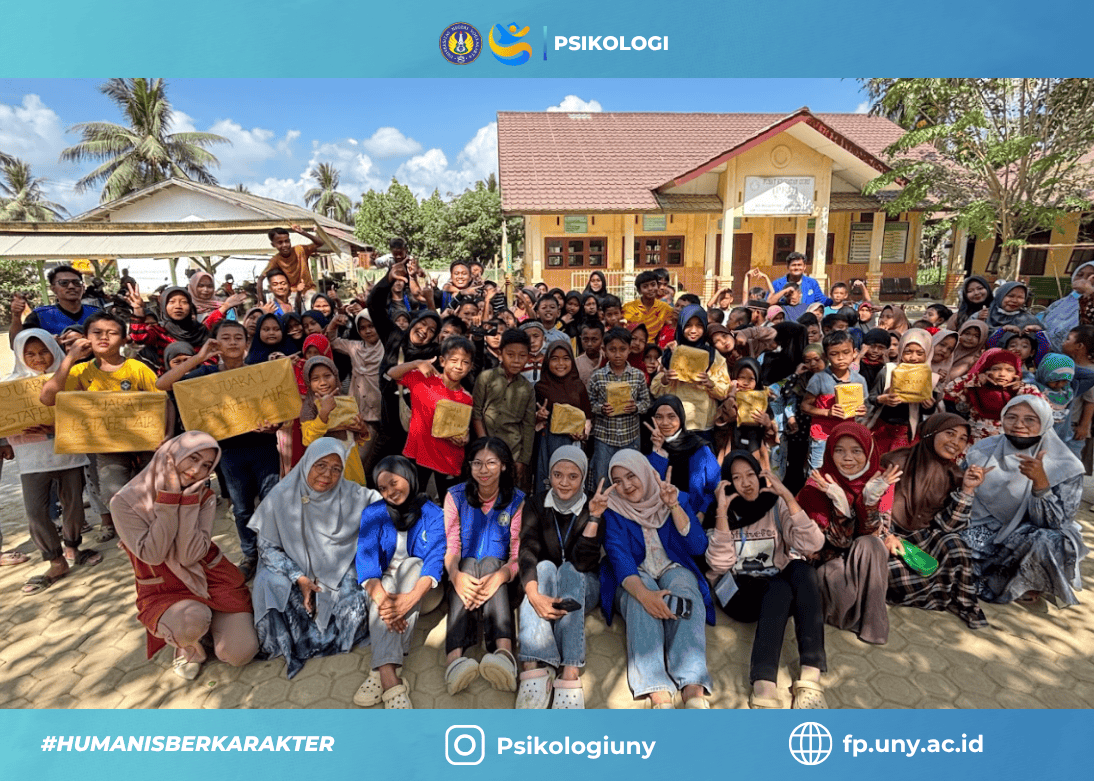
Aceh Tamiang, January 2026 – The floods that struck Aceh Tamiang Regency recently not only caused physical damage but also left psychological impacts on the affected communities, particularly children. In response to this situation, students participating in the UNY Humanitarian Community Service Program (KKN Kemanusiaan UNY 2026, Group 24) carried out a psychosocial assistance program for students at SDN Medang Ara, located in Kebun Medang Ara Village, Karang Baru District, Aceh Tamiang Regency, throughout January 2026. In this program, Bella Christina participated as the representative of students from the Faculty of Psychology, Universitas Negeri Yogyakarta (UNY).
The program was initiated in response to the post-flood conditions that disrupted students’ learning activities and emotional well-being. Several students were observed experiencing behavioral changes, including decreased learning motivation, limited social interaction, and unstable emotional conditions. Meanwhile, post-disaster recovery efforts in the area were largely focused on infrastructure restoration and the distribution of logistical aid, leaving children’s psychosocial needs insufficiently addressed.
Recognizing these circumstances, the UNY Humanitarian KKN students initiated a psychosocial assistance program as an early intervention to help students stabilize their emotional conditions. The program aimed to rebuild students’ sense of safety, strengthen their self-confidence, and restore their motivation to learn after the disaster. The psychosocial support program was conducted in stages throughout January 2026, with activities held every weekend at SDN Medang Ara and involving approximately 100 students as participants. The program consisted of several interconnected sessions designed to provide both emotional support and engaging learning experiences.
The first session was held on January 15, 2026, featuring a psychoeducation session on learning motivation. During this session, students were introduced to simple messages about maintaining enthusiasm for learning despite challenging circumstances. After the discussion, students participated in a creative activity where they shaped pieces of paper according to their imagination, such as stars, hearts, or other symbols they liked. On these creations, they wrote down their dreams and aspirations as a reflection of their hopes for the future. The works were then displayed on a large poster board, forming a “gallery of hopes” that could be seen by all students.
At the beginning of the activity, several students appeared hesitant and less active. However, as the creative process unfolded, the atmosphere gradually became warmer and more interactive. Students started to show enthusiasm, proudly presenting their work and sharing their aspirations with their peers and facilitators. The program continued on January 28, 2026, with a creative art activity involving collage-making. In this session, students were provided with prepared picture sheets and colorful origami paper that they could cut and paste creatively to complete the images. This activity encouraged students to express themselves visually while also developing their creativity and fine motor skills. The classroom atmosphere became lively as students exchanged materials, discussed their work, and shared their creations with their friends and facilitators.
The series of activities concluded on January 31, 2026, with competitions and group games involving all participating students. The event began with a gathering at the school field, where the principal of SDN Medang Ara delivered welcoming remarks and expressed appreciation for the psychosocial support program. The leader of the KKN group also delivered a brief message to encourage and motivate the students. The competitions included coloring contests and several interactive group games such as musical chairs and water relay races. These activities were designed to foster teamwork, promote sportsmanship, and provide students with a positive outlet for their energy and emotions in a joyful environment. Throughout the event, laughter and enthusiastic cheers filled the school grounds, creating a cheerful atmosphere and strengthening bonds among the students.
In addition to the structured activities, the KKN students also created opportunities for informal conversations with the children. During these interactions, several students shared their personal experiences during the floods, including stories about their homes, families, and the emotions they felt during and after the disaster. The KKN students responded with supportive listening, positive reinforcement, and guidance to help the children better understand and express their feelings in healthy ways. The implementation of the program showed positive outcomes among the students. Gradually, students who initially appeared passive began to show greater participation in activities, increased confidence in expressing their opinions, and more active social interactions with their peers. The learning environment, which initially felt quiet and rigid, became more warm, communicative, and enthusiastic.
Students’ enthusiasm was also reflected in their spontaneous responses. One second-grade student, Fikri, expressed his excitement by saying, “Why are you leaving so soon? Please stay one more week—I still want to spend time with you.” In another sharing session, a student honestly admitted, “I rarely open up to others, you know.” These simple expressions indicated that the program not only provided enjoyable activities but also created a safe and trusting environment for students to express their emotions. Support for the program also came from the school community. During the closing event on January 31, 2026, a fifth-grade teacher at SDN Medang Ara, Mrs. Ritayana, expressed her appreciation for the contribution of the KKN students. She stated, “Thank you very much for your help during this time, both in supporting learning activities and providing social support for the children here. We wish you continued success.”
The tangible outputs of the program include the students’ gallery of aspirations, collage and drawing artworks, photo and video documentation of the activities, as well as psychoeducational materials that can continue to be utilized by the school as part of ongoing support efforts. Through this initiative, the UNY Humanitarian KKN 2026 (Group 24) students demonstrated the important role of higher education institutions in supporting community recovery after disasters, particularly by helping children rebuild their sense of safety, hope, and motivation to learn during the recovery process.

 Fakultas Psikologi